Navigate Without Limits Autonomous UAV navigation engineered for GPS-denied environments.

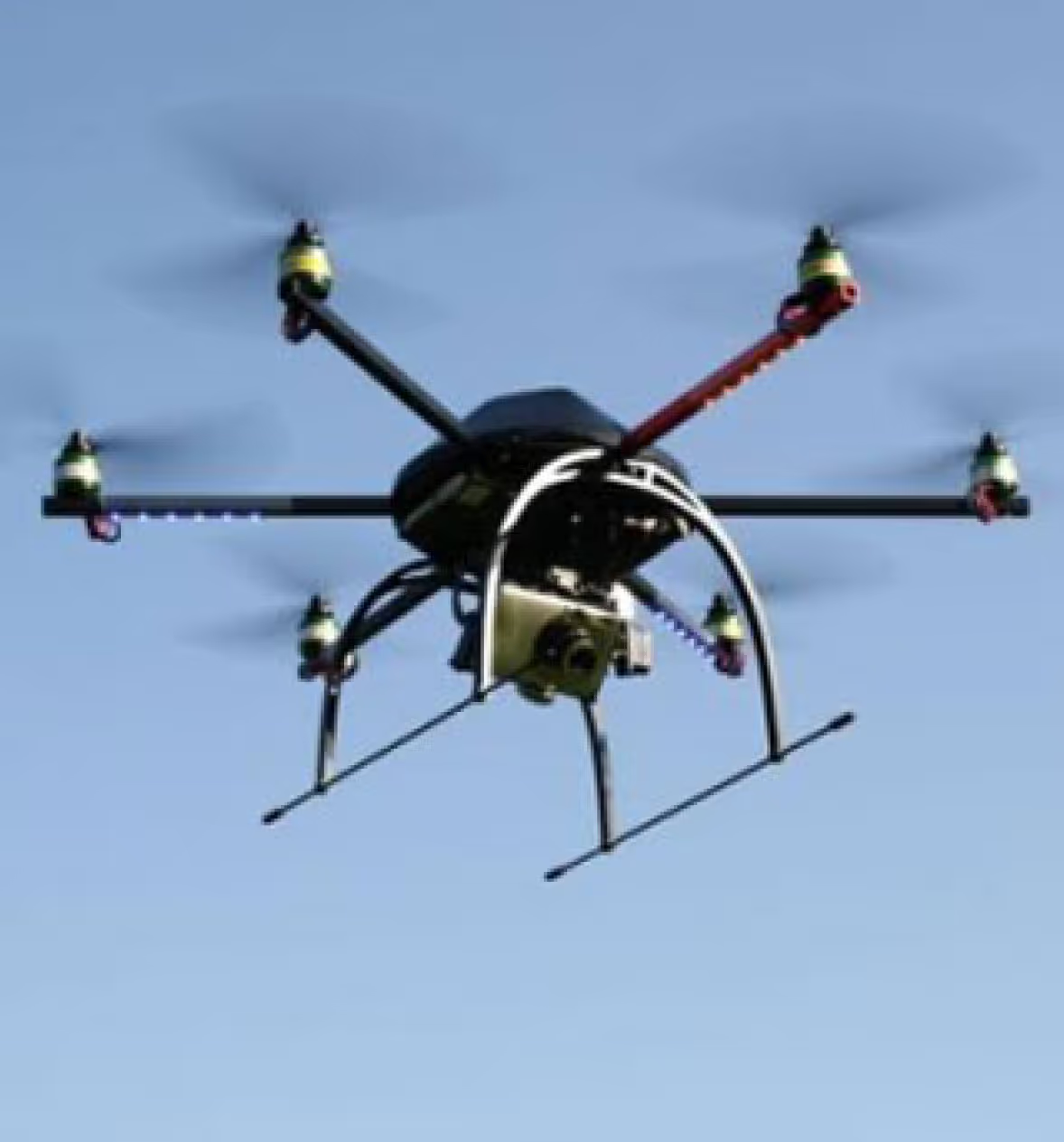

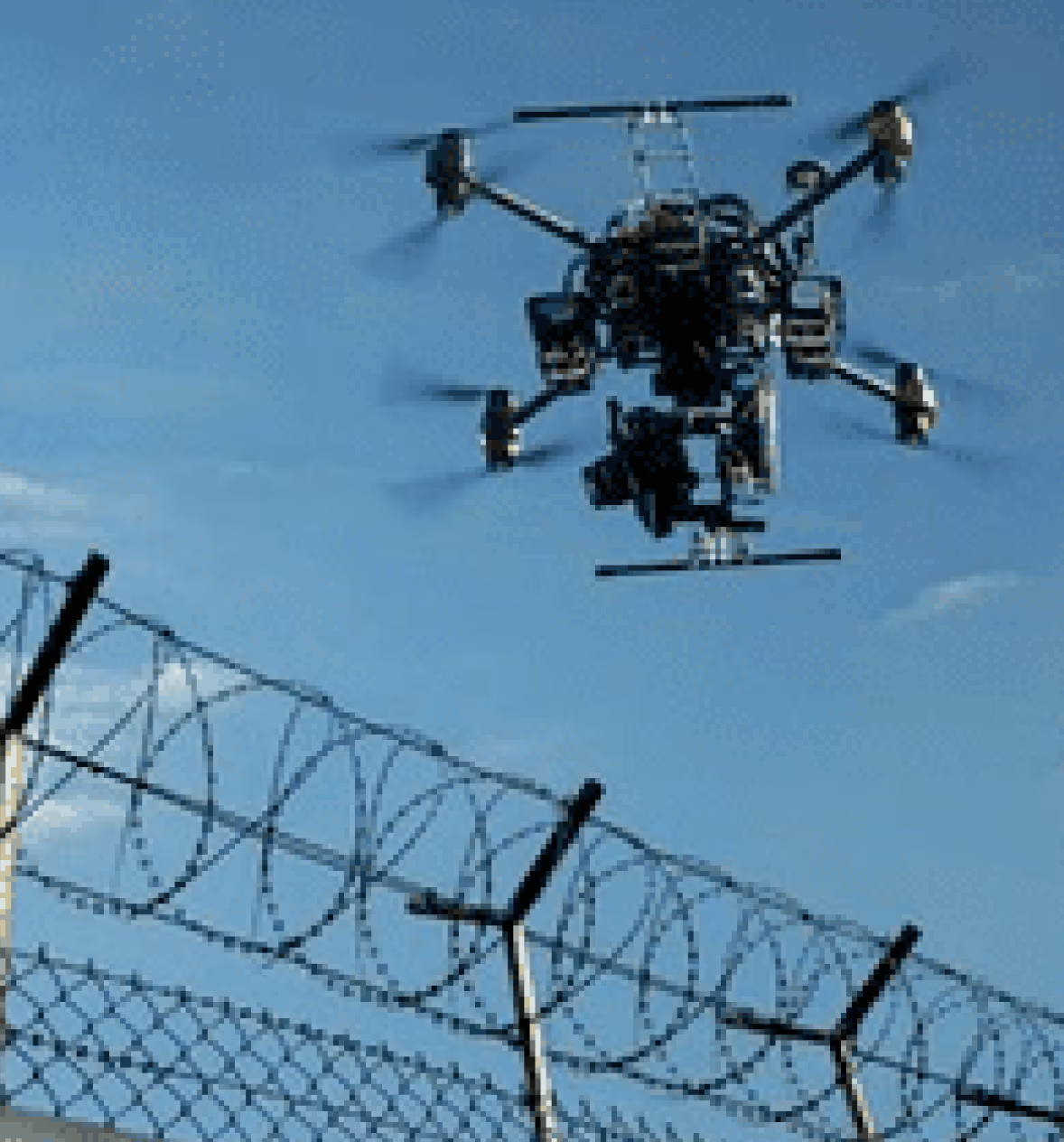
An intelligent, GPS-independent navigation system designed to deliver accurate and resilient UAV operations across challenging environments.
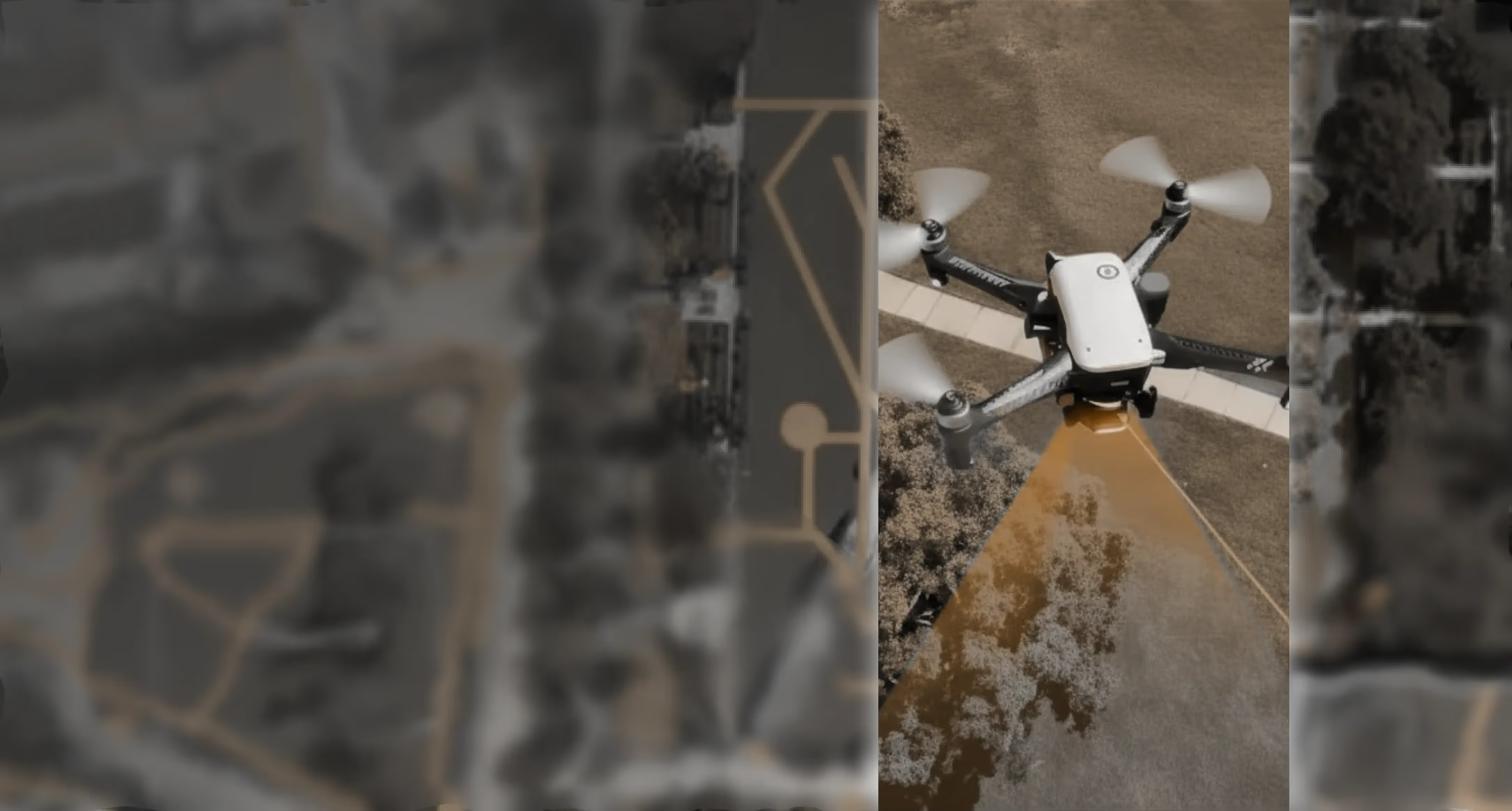
This project focuses on developing a robust and intelligent navigation system for unmanned aerial vehicles (UAVs) that can operate without GPS. In GPS-jammed zones drones must rely on their own sensors to determine their position and navigate safely.Our system uses vision-based perception, inertial sensing, and advanced sensor fusion algorithms to allow a drone to understand where it is, how it is moving, and how to reach mission objectives even with no satellite signals available.
Key Capabilities
Core navigation independence
GPS independence
Fully operational in GPS-jammed, spoofed, and denied environments with no degradation in navigational performance. Engineered for the most contested and signal-restricted operational zones.
- Supports strategic and high-risk mission scenarios
- Zero dependency on satellite infrastructure at any flight phase
Vision-inertial sensor fusion
Camera and IMU data are tightly fused to produce stable, continuous state estimation maintaining accurate positioning and attitude even when individual sensors face degraded conditions.
- Eliminates reliance on external navigation infrastructure
- Robust across varied lighting, terrain, and flight dynamics
Processing & flight performance
Real-time processing
Low-latency visual odometry and state estimation computed onboard maintaining navigational accuracy across hovering, forward flight, and aggressive high-speed manoeuvres without processing lag.
- Consistent performance across all flight modes and dynamics
- Embedded-optimised compute with minimal latency overhead
Map-matching capability
An optional operational mode that compares live imagery against pre-loaded maps to apply absolute position corrections significantly reducing accumulated drift over long-duration missions.
- Improves accuracy for extended-range and endurance missions
- Activatable on demand without disrupting core navigation
Safety, autonomy & deployment
Autonomous safety & handover
Continuous onboard confidence checks automatically detect navigation state changes triggering smooth, seamless handover between GPS-available and GPS-denied modes without operator intervention.
- Automatic fallback logic prevents navigational failure
- Zero discontinuity during mode transitions in dynamic environments
Compact & lightweight design
Designed for integration on small multirotor platforms with minimal power draw and embedded-friendly compute that imposes negligible weight and energy penalty on the host UAV.
- Suitable for tactical, reconnaissance, and survey drones
- Deployable on resource-constrained embedded hardware
Impact
The system enables secure and resilient UAV operations in contested and high-risk environments where conventional GPS-based navigation fails. By removing dependency on satellite signals, it strengthens mission reliability for strategic use cases, improves flight safety through autonomous fallback mechanisms, and expands the operational envelope of UAVs in GPS-denied conditions.


.avif)


.svg)
.png)
Explore other projects